Method
Each method works in a different way. At the beginning of the session, we talk over a cup of tea about what can support you in that moment. The focus is on accompanying you through your processes and offering impulses for change. Every person is shaped by a complexity of personal history, behavioral patterns, and belief systems. These influence physical states such as muscle tone or tension, as well as different capacities for relaxation. A core principle of my work is therefore to see each person in their uniqueness, while also acknowledging the social influences that shape us in similar ways.
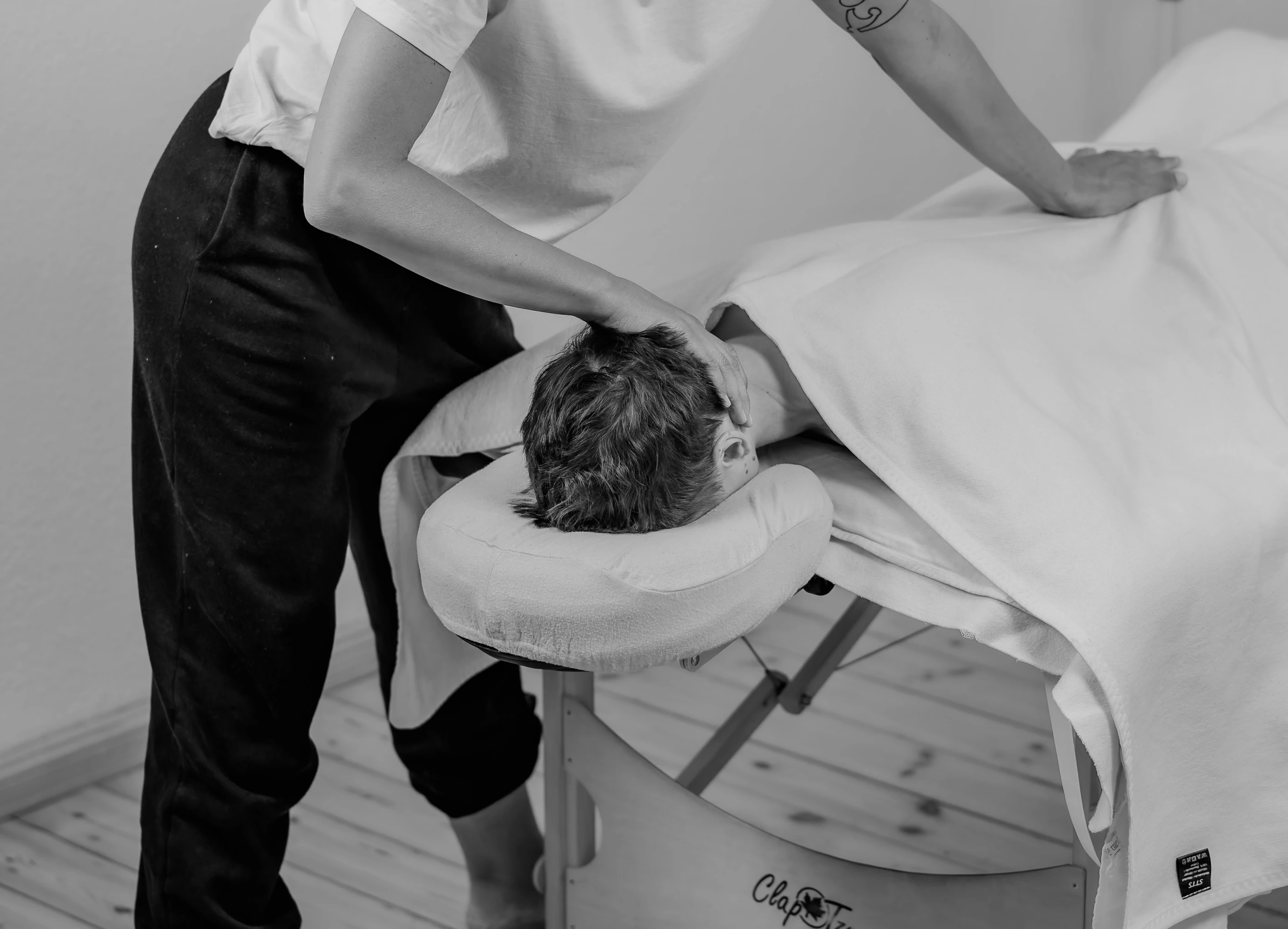
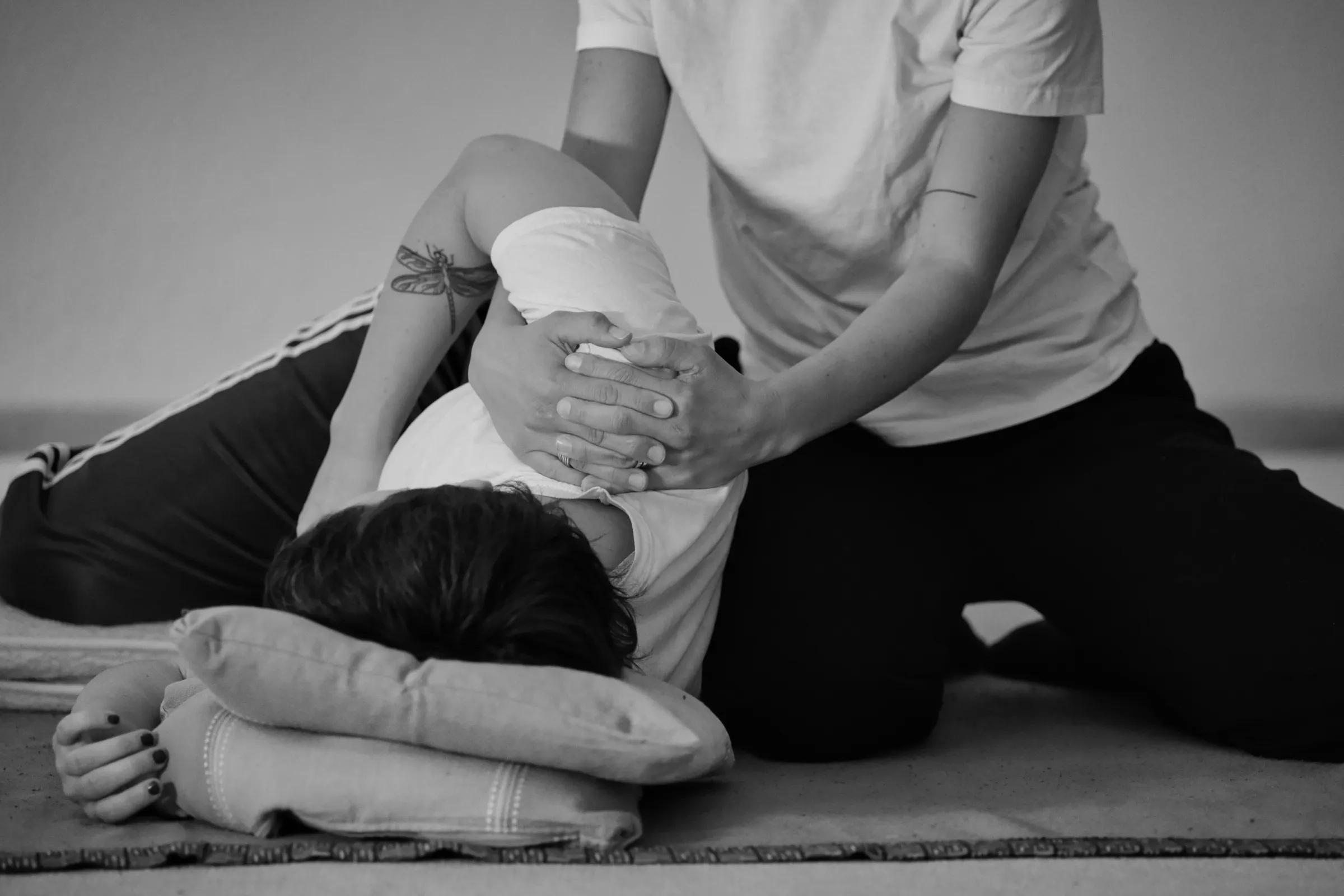
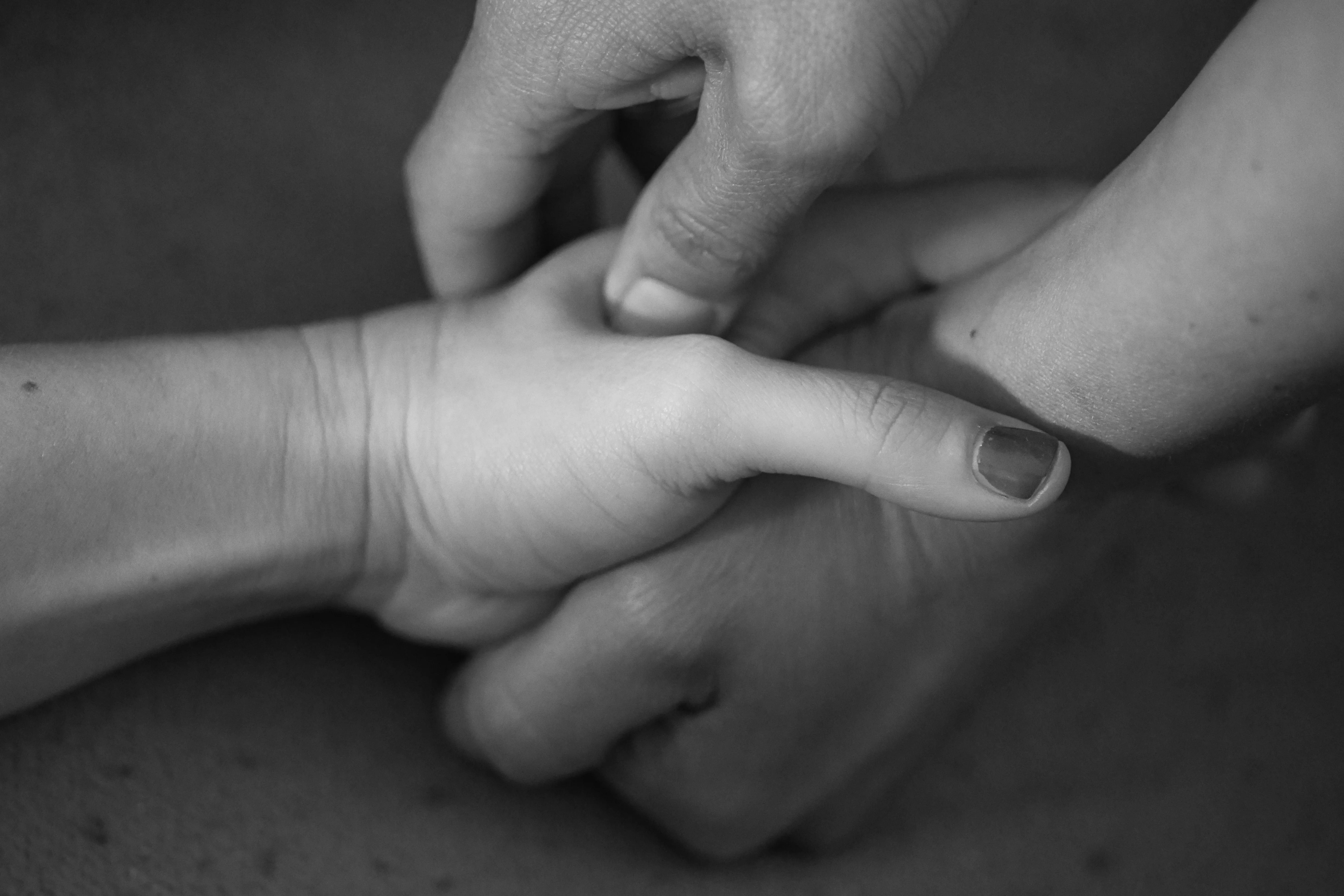
Massages can dissolve tension, blockages, fear and stress while easing pain. They invite you to reconnect with yourself, strengthen self-awareness, feel your own needs more clearly and prevent chronic imbalance. Touch helps you feel more grounded, balanced and safe, it can soothe the nervous system and also be enlivening, offering strength, clarity and resilience.
My massages are influenced by classical massage, deep tissue massage, Thai and Lomi Lomi massage, as well as Shiatsu and acupressure. They are intuitive in nature, alternating between gentle strokes and deeper pressure. I usually use warm oil, either on the whole body or on specific areas, depending on your wishes and needs.
Shiatsu is a form of body therapy developed in Japan, with roots in ancient Chinese medicine. A treatment usually takes place on the floor on a soft mat and is given through clothing. Gentle stretches, releases, joint mobilizations, and mindful pressure techniques flow into one another, forming an individual treatment that typically lasts about an hour. Shiatsu focuses on contact and connection, as well as on the awareness of boundaries and differences.
Shiatsu is a profound practice of developing perception that can extend into everyday life. It helps to slow down, to strengthen sensitivity and presence, and to understand touch as a form of encounter. For me, it means accompanying another person’s body with curiosity, without wanting to change it. It is about creating a space where we can practice letting go and not having to do anything, becoming more aware of ourselves and listening to each other. For me, Shiatsu is also a form of self-observation and an energetic exchange, where my own relaxation influences the quality of contact, and I can allow myself to be guided by the body lying before me.
Acupuncture is a treatment method of Chinese medicine. It has a direct influence on processes in the body. By inserting needles at specific points on the body, the body’s self-healing abilities can be activated to restore balance. In this way, acute or chronic pain can be relieved, and emotional or physical discomfort and illnesses can be treated. Acupuncture is also a way to prevent illness and to come into contact with oneself.
Before the actual acupuncture treatment, we begin with a consultation, followed by pulse and tongue diagnosis according to the principles of Chinese medicine. Fine acupuncture needles are then inserted at selected points. The needles remain in the body for about 20–30 minutes.
The first treatment lasts approximately 90 minutes, as the initial consultation requires more time. Follow-up appointments last about 60 minutes.
NADA Ear Acupuncture
The Black Panthers and the Young Lords were revolutionary, anti-imperialist organizations whose members and supporters occupied Lincoln Hospital in New York in the 1970s. Part of their struggle was to demand better healthcare for their community. Together with other professionals, they developed the NADA protocol.
In this method, five small acupuncture needles are placed at specific points in both ears and remain there for 30–45 minutes. During this time, the person can sit or lie down, and the treatment takes place in a group setting. The NADA protocol has long been used to alleviate symptoms of substance withdrawal, to provide support in traumatic situations, to reduce post-traumatic stress, and more generally for various kinds of emotional imbalances (including manic episodes, depression, anxiety, insomnia, and others).